
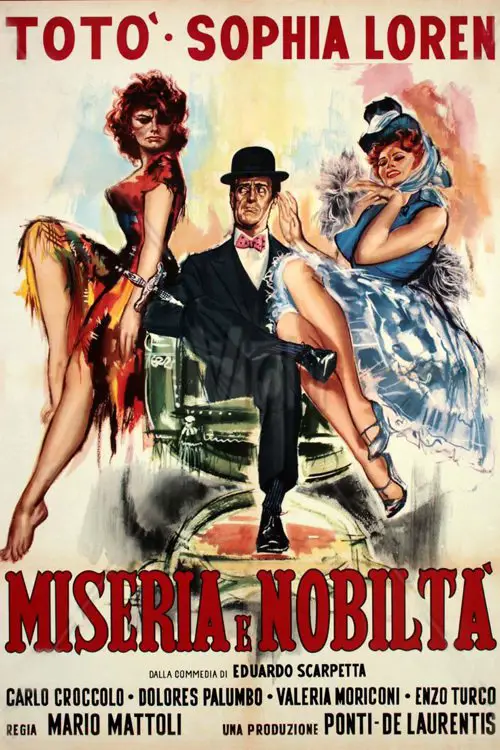
Poverty and Nobility (1954)
Similar movies
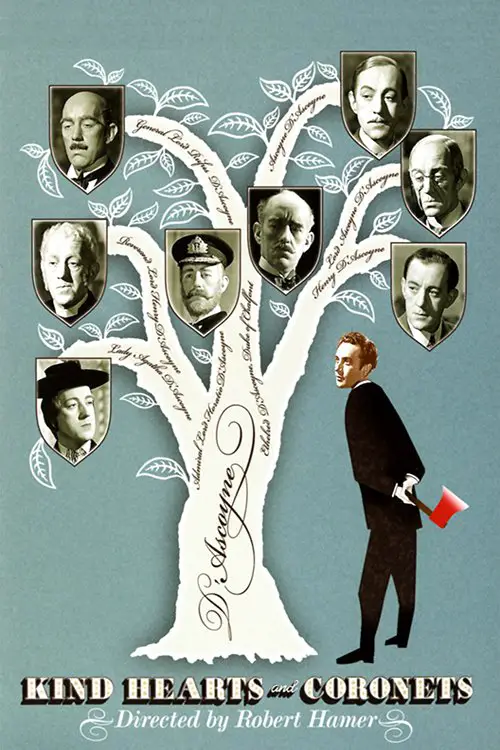
Louis Mazzini's mother belongs to the aristocratic family D'Ascoyne, but she ran away with an opera singer. Therefore, she and Louis were rejected by the D'Ascoynes. Once adult, Louis decides to avenges his mother and him, by becoming the next Duke of the family. Murdering every potential successor is clearly the safest way to achieve his goal.

Momoko is an ordinary girl, living an ordinary life. Ordinary, that is, if you define ordinary as wearing elaborate lolita dresses from the Rococo period in 18th Century France. However, when punk girl and self-styled 'Yanki' Ichiko comes calling, her days as 'ordinary' are most certainly numbered...
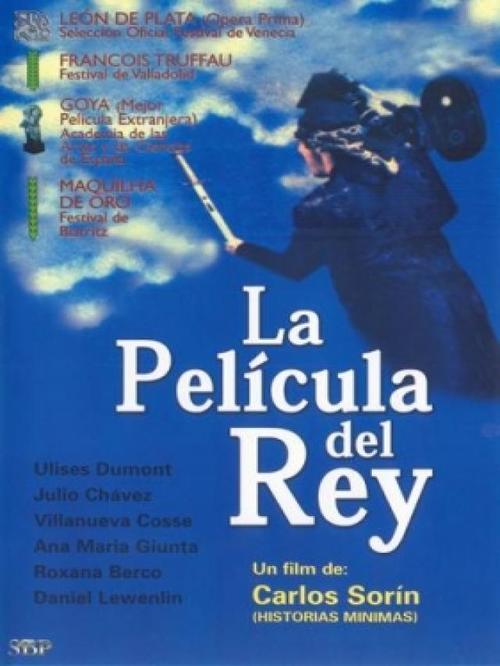
Buenos Aires movie director, very fond of the legend of the King of Patagonia and Araucania, decides to make a movie about it. Despite of financial troubles, technical problems, misfortune and desertions, he undertakes the journey to Patagonia for the film with a second-rate actor company. Neglected by the producer and shortly after by the company, he will make the movie alone, in a surreal landscape like mad.
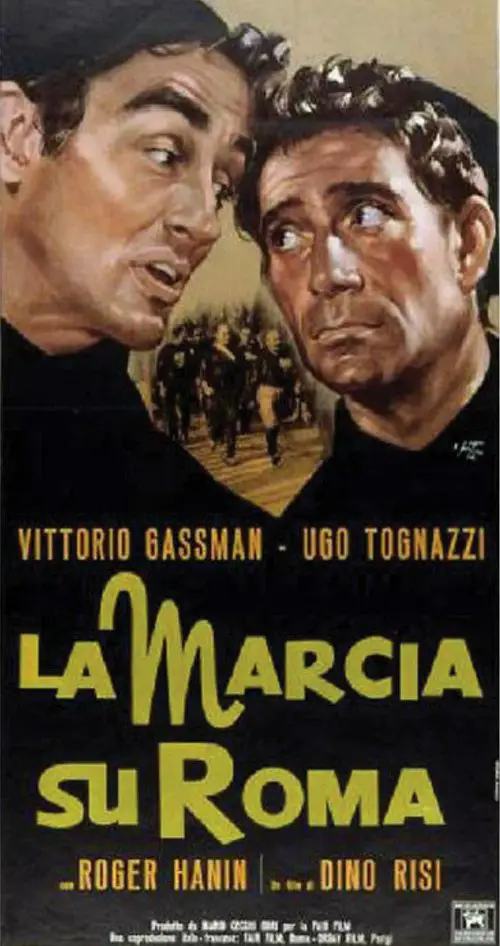
March on Rome (Italian: La marcia su Roma) is a 1962 comedy film by Dino Risi with Vittorio Gassman and Ugo Tognazzi, aimed at describing the March on Rome of Benito Mussolini's black shirts from the point of view of two newly recruited, naïve black shirts

Franczesko, FikoÅ and Szyja known each other for years, they work together and spend their free time together. When they lose their job in a local factory, decide to spend a crazy weekend in the capital. But the real adventure has yet to begin, when - during a forced stop in charming surroundings Transriver - three guys is mistakenly taken for German investors.
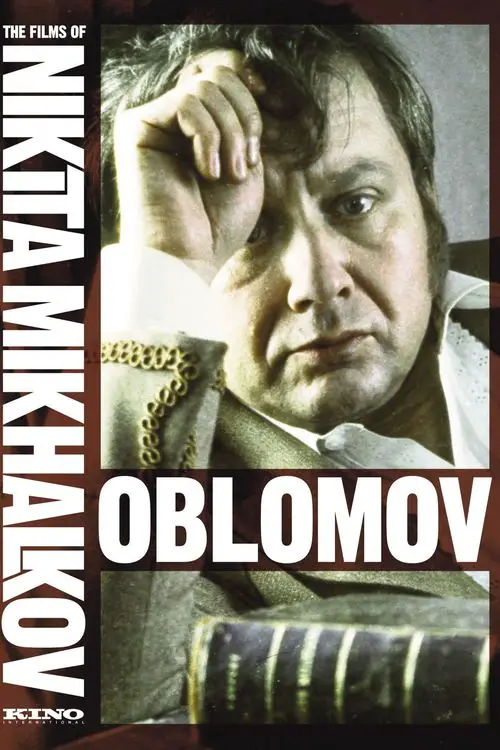
St. Petersburg, mid 19th century: the indolent, middle-aged Oblomov lives in a flat with his older servant, Zakhar. He sleeps much of the day, dreaming of his childhood on his parents' estate. His boyhood companion, Stoltz, now an energetic and successful businessman, adds Oblomov to his circle whenever he's in the city, and Oblomov's life changes when Stoltz introduces him to Olga, lovely and cultured. When Stoltz leaves for several months, Oblomov takes a country house near Olga's, and she determines to change him: to turn him into a man of society, action, and culture. Soon, Olga and Oblomov are in love; but where, in the triangle, does that leave Stoltz?
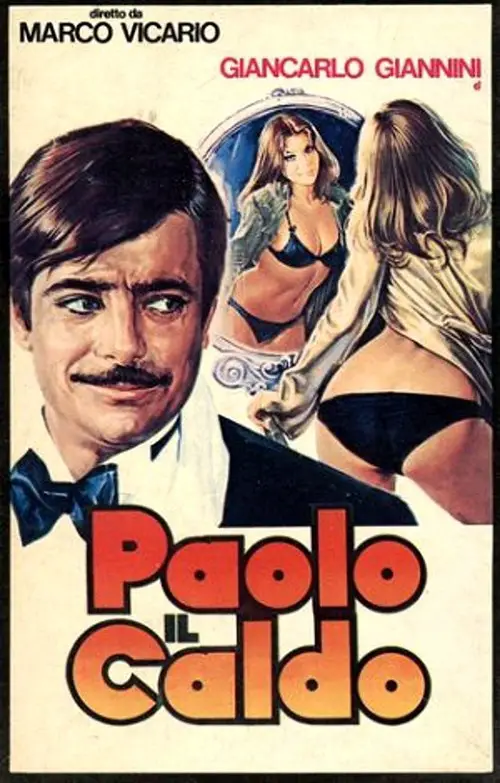
From his youth, Paolo Castorini, a Sicilian baron, is as attracted to women as they to him. Giovanna, a servant girl, Lillian, a serious girlfriend in Rome, a hostess at a post-war party, Paolo makes love to them all. He also feels dissatisfied with a life only of the body, compared to his journalist friend Vincenzo and his own father, a sober and serious thinker. When his father is on his deathbed, Paolo learns of syphilis in the family and something of the curse of dissolution. Some years later, he resolves to marry Katrina, the pure daughter of the woman he should have married. He wants her purity to redeem him so he can make something of his life. But is it too late?
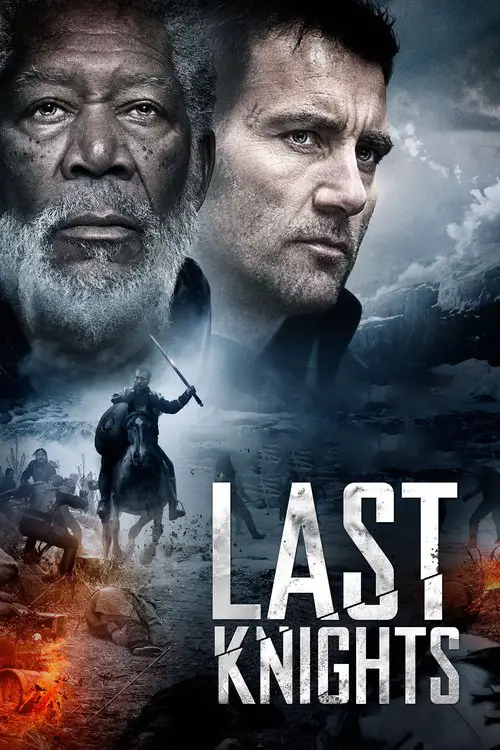
When an evil emperor executes their leader, his band of knights â bound by duty and honour â embarks on a journey of vengeance that will not come to an end until they've destroyed their mortal foe.
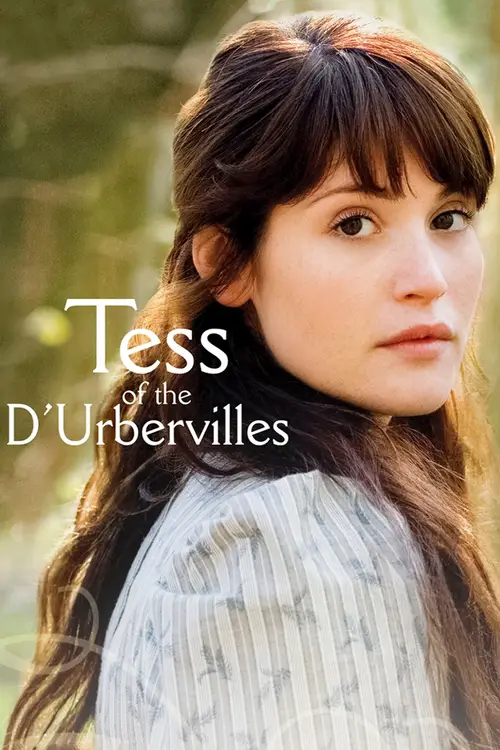
Forced by poverty to seek support, the innocent Tess Durbeyfield seeks the help of the D'Urbervilles.
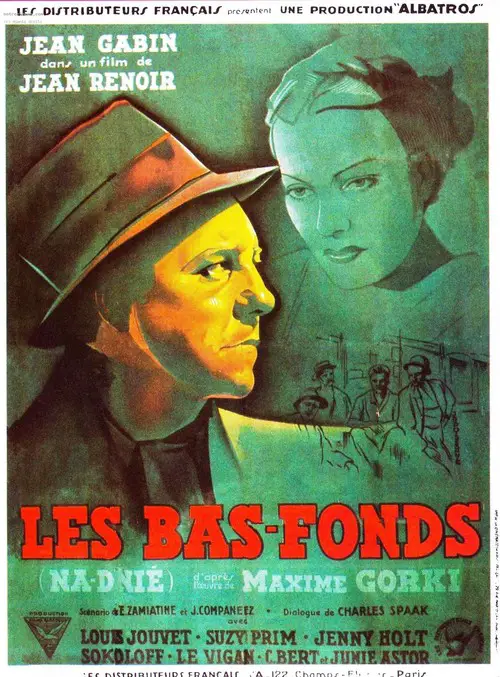
The film treats the imprisoning hold of poverty; the disheartening odds of people rising from such social despair, and the ease in which those in the upper spheres of Society may descend.
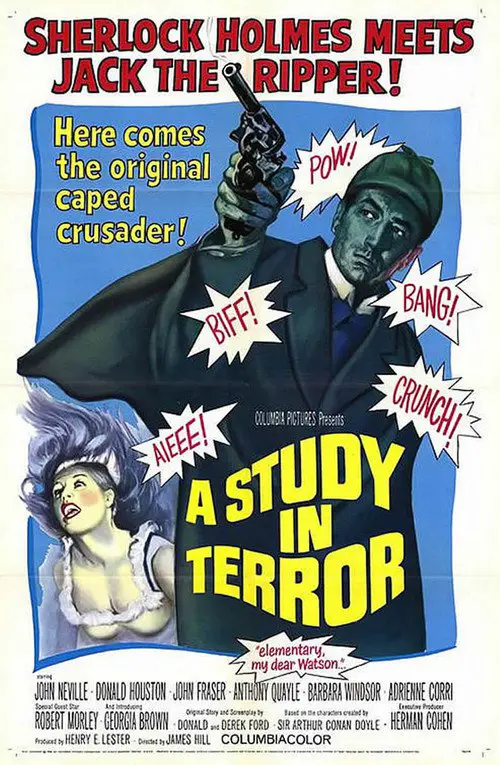
When Watson reads from the newspaper there have been two similar murders near Whitechapel in a few days, Sherlock Holmes' sharp deductive is immediately stimulated to start its merciless method of elimination after observation of every apparently meaningless detail. He guesses right the victims must be street whores, and doesn't need long to work his way trough a pawn shop, an aristocratic family's stately home, a hospital and of course the potential suspects and (even unknowing) witnesses who are the cast of the gradually unraveled story of the murderer and his motive.

When Pilar's befriended neighbour Aurora dies, Pilar starts to dig into Aurora's past and learns about Aurora's very tragic love story.
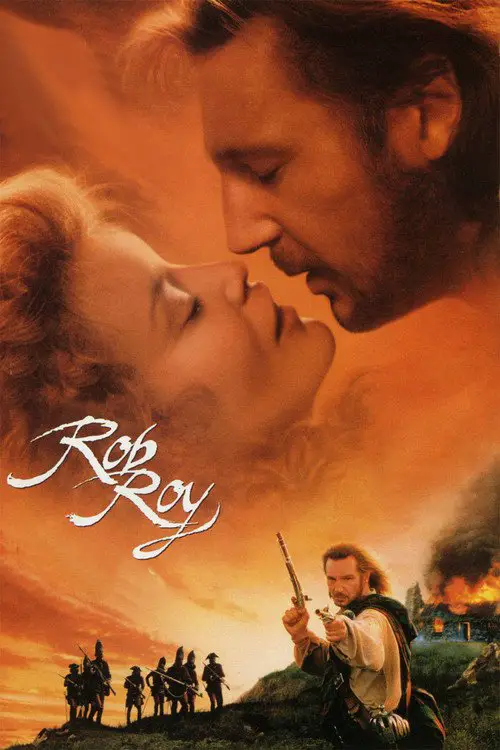
In the highlands of Scotland in the 1700s, Rob Roy tries to lead his small town to a better future, by borrowing money from the local nobility to buy cattle to herd to market. When the money is stolen, Rob is forced into a Robin Hood lifestyle to defend his family and honour.
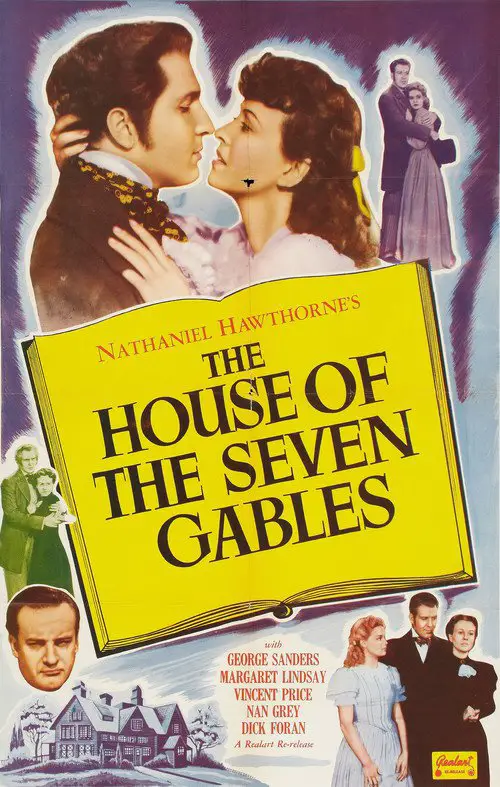
In 1828, the bankrupt Pyncheon family fight over Seven Gables, the ancestral mansion. To obtain the house, Jaffrey Pyncheon obtains his brother Clifford's false conviction for murder. Hepzibah, Clifford's sweet fiancée, patiently waits twenty years for his release, whereupon Clifford and his former cellmate, abolitionist Matthew, have a certain scheme in mind.
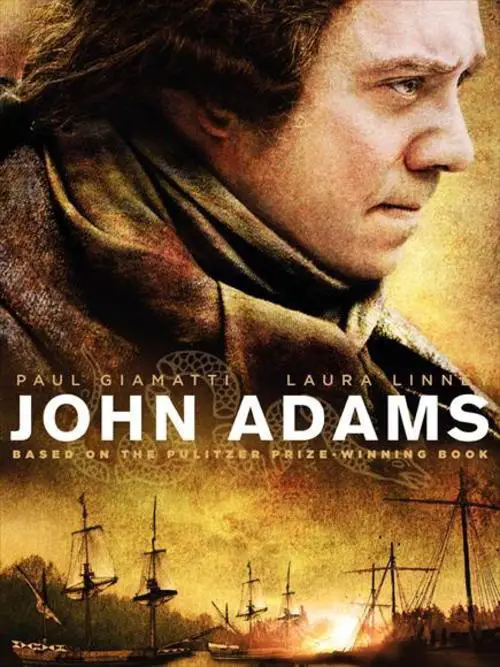
The life of one of the USA's Founding Fathers, its second President, and his role in the nation's first 50 years.
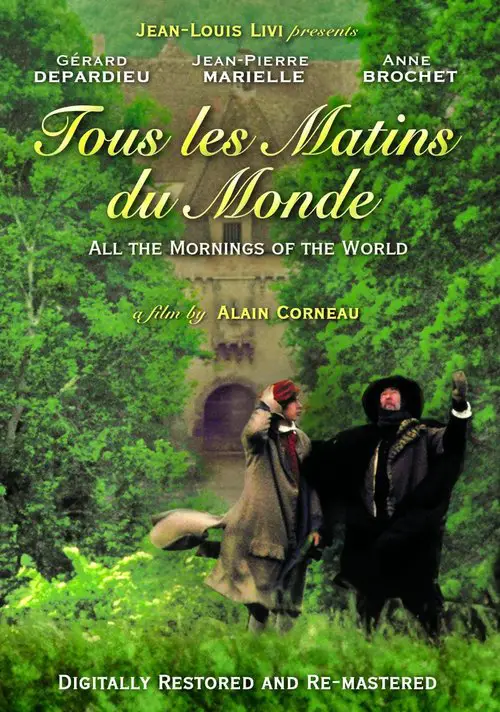
It's late 17th century. The viola da gamba player Monsieur de Sainte Colombe comes home to find that his wife died while he was away. In his grief he builds a small house in his garden into wich he moves to dedicate his life to music and his two young daughters Madeleine and Toinette, avoiding the outside world. Rumor about him and his music is widespread, and even reaches to the court of Louis XIV, who wants him at his court in Lully's orchestra, but Monsieur de Sainte Colombe refuses. One day a young man, Marin Marais, comes to see him with a request, he wants to be taught how to play the viol.
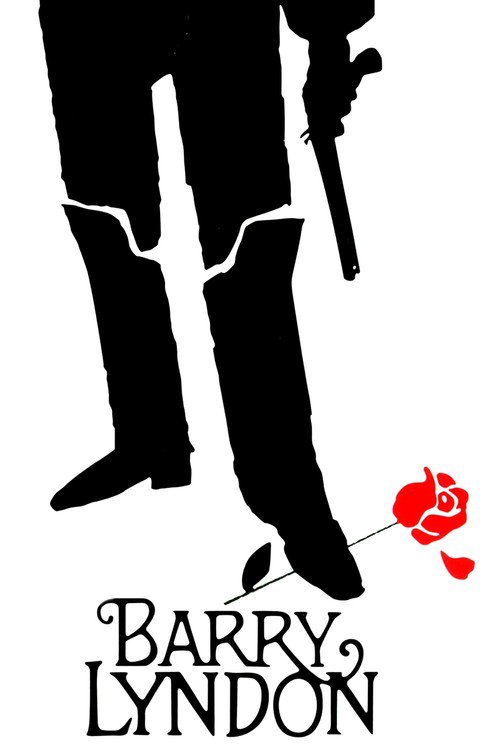
In the Eighteenth Century, in a small village in Ireland, Redmond Barry is a young farm boy in love with his cousin Nora Brady. When Nora engages to the British Captain John Quin, Barry challenges him for a duel of pistols. He wins and escapes to Dublin, but is robbed on the road. Without any other alternative, Barry joins the British Army to fight in the Seven Years War.
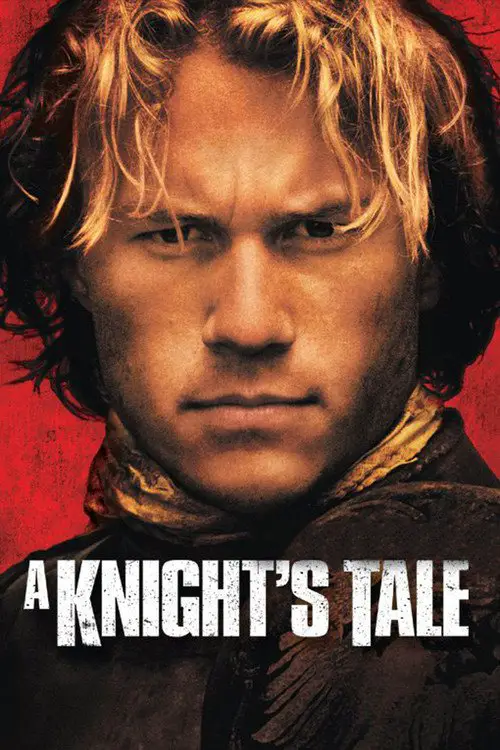
William Thatcher, a peasant, is sent to apprentice with a Knight named Hector as a young boy. Urged by his father to "change his Stars", he assumes Sir Hector's place in a tournament when Hector dies in the middle of it. He wins. With the other apprentices, he trains and assumes the title of Sir Ulrich von Lichtenstein.
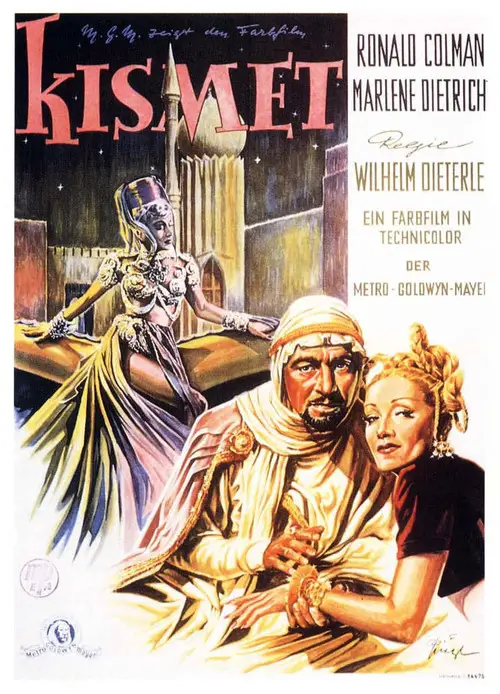
Hafiz, a rascally beggar on the periphery of the court of Baghdad, schemes to marry his daughter to royalty and to win the heart of the queen of the castle himself.
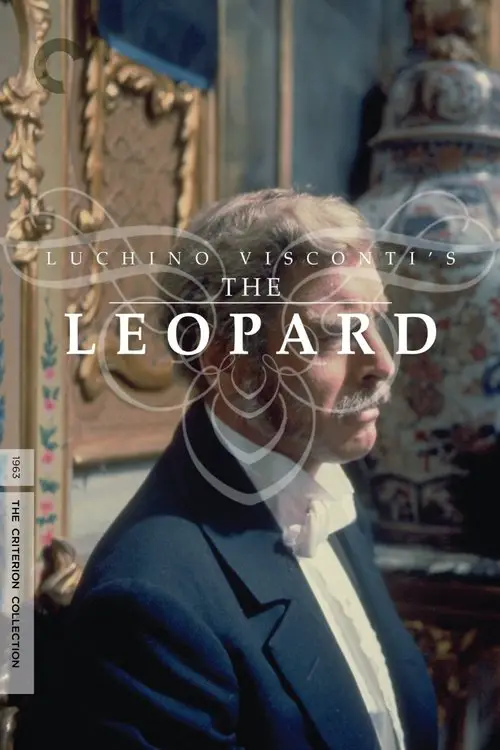
As Garibaldi's troops begin the unification of Italy in the 1860s, an aristocratic Sicilian family grudgingly adapts to the sweeping social changes undermining their way of life. Proud but pragmatic Prince Don Fabrizio Salina (Burt Lancaster) allows his war hero nephew, Tancredi (Alain Delon), to marry Angelica (Claudia Cardinale), the beautiful daughter of gauche, bourgeois Don Calogero, in order to maintain the family's accustomed level of comfort and political clout.
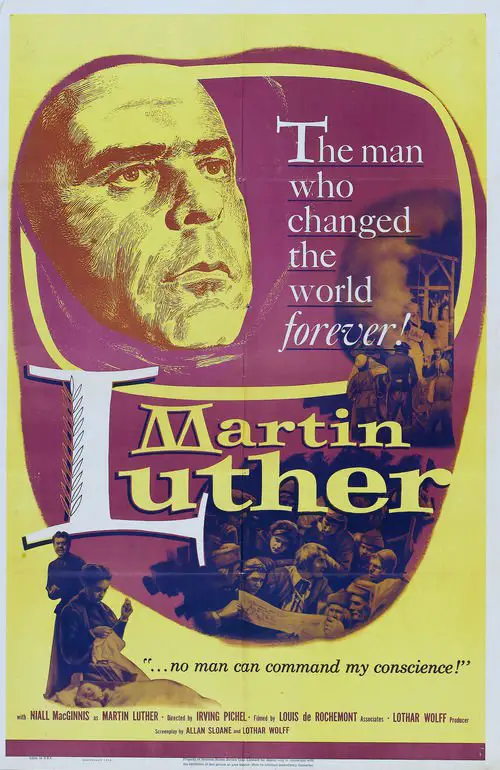
The dramatic black and white classic film of Martin Luther's life made in the 1950's. This film was originally released in theaters worldwide and nominated for an Academy Award. A magnificent depiction of Luther and the forces at work in the surrounding society that resulted in his historic reforming efforts. This film traces Luther's life from a guilt-burdened monk to his eventual break with the Roman Church. This film, in spite of its age, continues to be a popular resource to introduce Luther's life.

Someone we hear talking - but whom we do not see - speaks of a project which describes the four key moments of love: meeting, physical passion, arguments/separation and making up. This project is to be told through three couples: young, adult and old. We do not know if the project is for a play, a film, a novel or an opera. The author of the project is always accompanied by a kind of servant. Meanwhile, two years earlier, an American civil servant meets with an elderly French couple who had fought in the Resistance during World War II, brokering a deal with a Hollywood director to buy the rights to tell their story. The members of the old couple's family discuss heatedly questions of nation, memory and history.

A young and impatient stockbroker is willing to do anything to get to the top, including trading on illegal inside information taken through a ruthless and greedy corporate raider whom takes the youth under his wing.
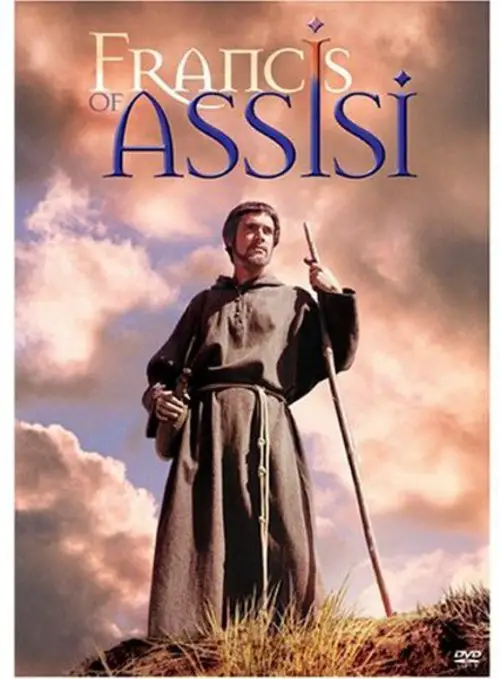
The story of a lusty, fighting young adventurer who exchanged his sword for a cross
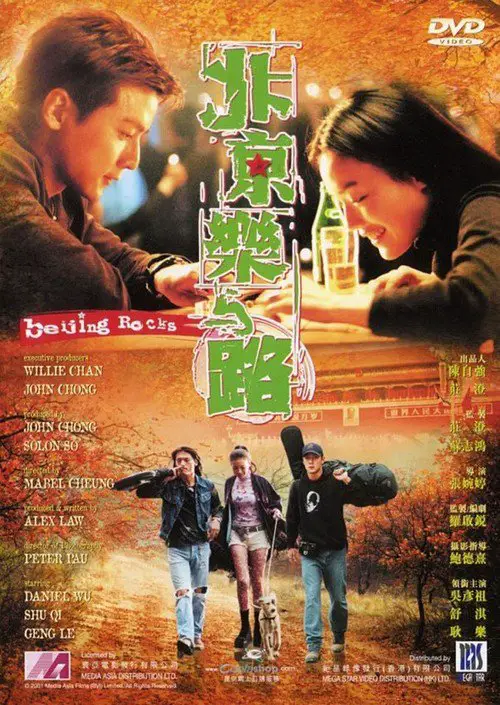
A rock and roll story that portrays the decay of political and cultural lacunae that have separated China and Hong Kong for so long.
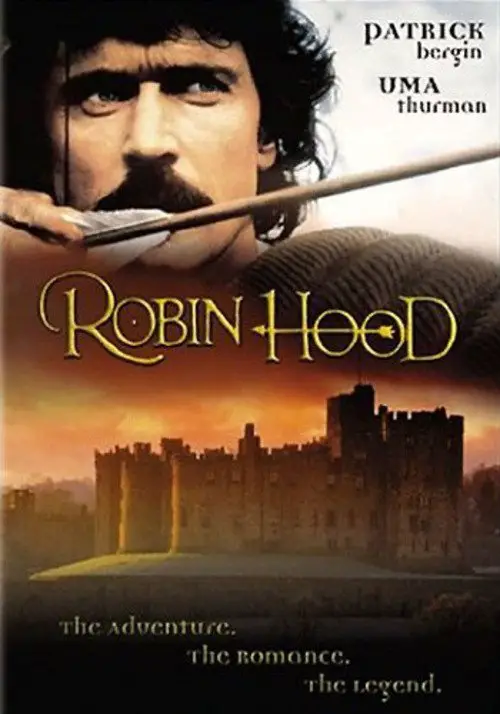
Yet another version of the classic epic, with enough variation to make it interesting. The story is the same, but some of the characters are quite different from the usual, in particular Uma Thurman's very special maid Marian. The photography is also great, giving the story a somewhat darker tone.
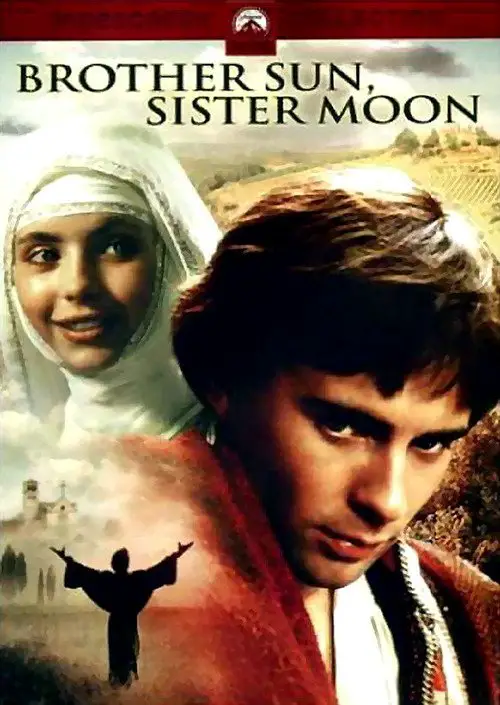
This is a dramatization of events in the life of St. Francis of Assisi from before his conversion experience through his audience with the pope, including his friendship with St. Clare.
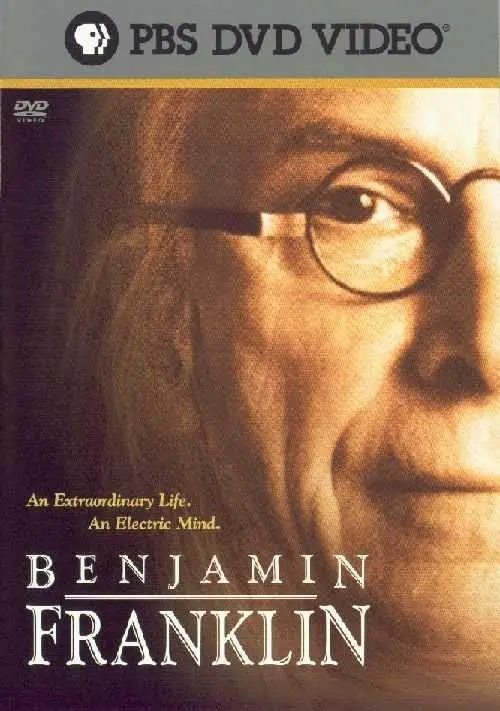
The story of Franklin's epic life from humble beginnings to fame as a scientist, founding father and America's first diplomat to France. Let The Experiment Be Made (1706 - 1753) Franklin quickly rises to prominence as a printer and publisher in Philadelphia. His discoveries in the new science of electricity help free the world from the harmful effects of lightning and propel Franklin onto the world stage. The Making Of A Revolutionary (1755 - 1776) In London, Franklin finds himself in the midst of a growing dispute between England and the colonies, a dispute that turns this loyal subject of the British empire into a revolutionary and causes a tragic break with his own son. The Chess Master (1776 - 1790) Franklin embarks on the most important mission of his long life when he becomes diplomat to France during the American Revolution. After the war, he plays a critical role in creating the U.S. Constitution and becomes the only founding father to actively campaign against slavery.
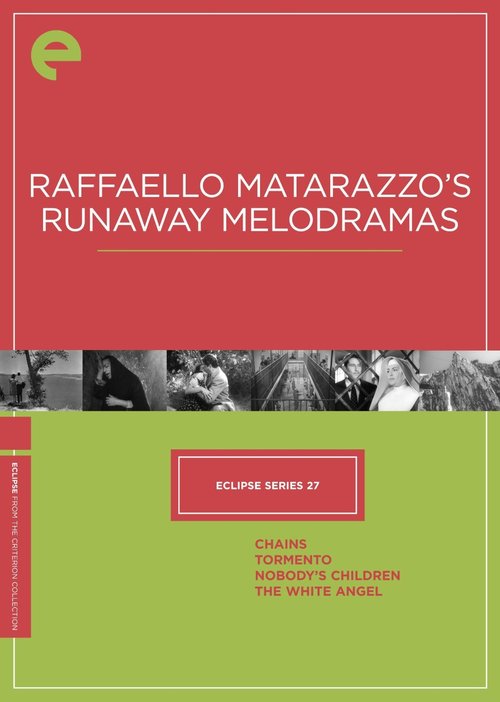
In The White Angel, Raffaello Matarazzoâs sequel to his blockbuster Nobodyâs Children, the perpetually put-upon Guido and Luisa return for a new round of trials and tribulations.
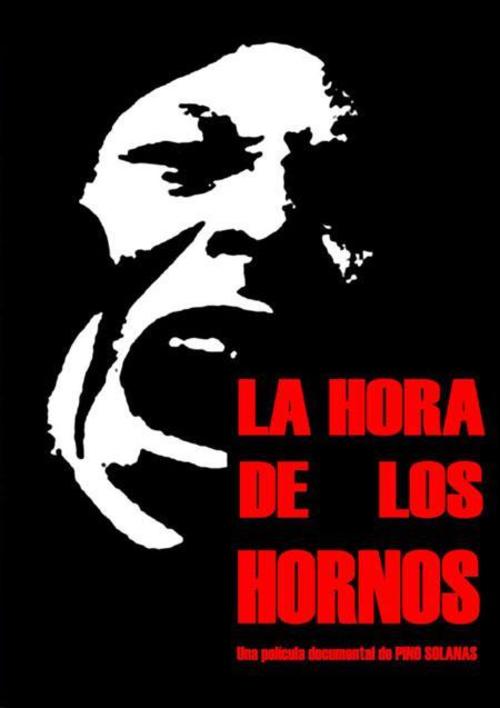
The Hour of the Furnaces (Spanish: La hora de los hornos) is a 1968 film directed by Octavio Getino and Fernando Solanas. It addresses the politics of the 'Third worldist' films and Latin-American manifesto of the late 1960s.
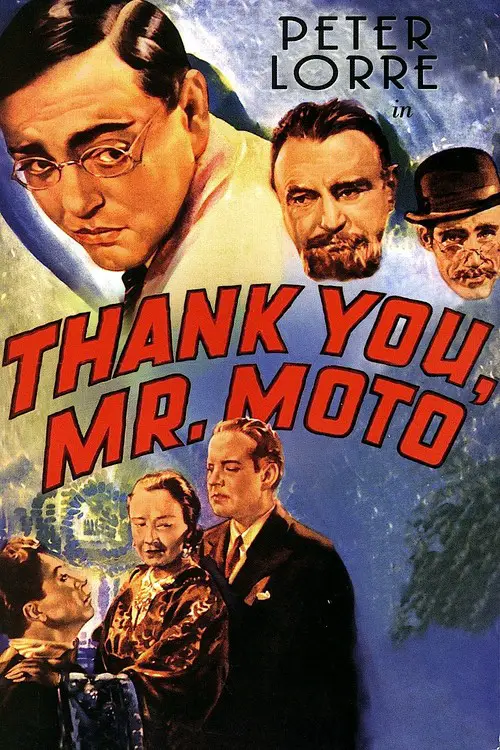
Mr. Moto Heads to China on a quest for seven ancient scrolls that reveal the location of Genghis Khan's tombâa crypt filled with fabulous treasure! But Moto isn't the only one stalking the scrollsâso is a shadowy band of thieves. But when his ruthless rivals go too far, the mild-mannered detective's quest for antiquities becomes a passion for vengeanceâbecause if he can't bring these villains to justice... he'll bring them to their knees.
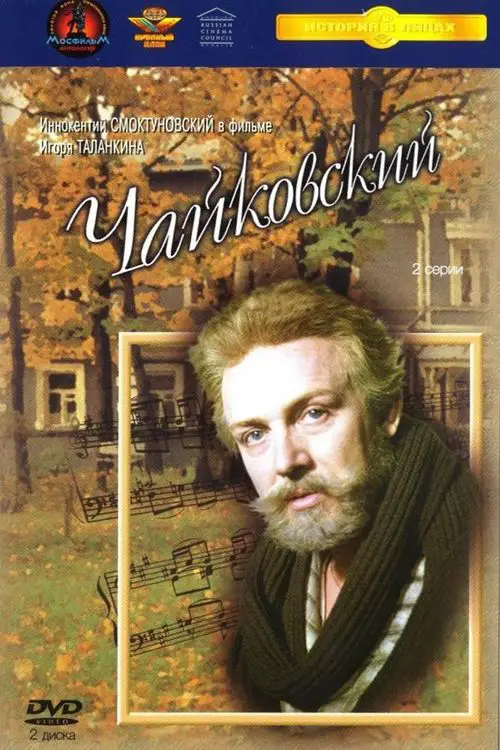
The film is dedicated to the great Russian composer Pyotr Tchaikovsky (1840-1893). It tells of the last twenty years of the great masterâs life, of his friendship with Baroness von Meck, an outstanding woman of her time, who for many years was Tchaikovskyâs guardian angel. The film also includes retrospections of the composerâs childhood and adolescent years, with Tchaikovskyâs life poetically recounted against the background of fragments from his operas and ballets performed by the best Russian musicians.
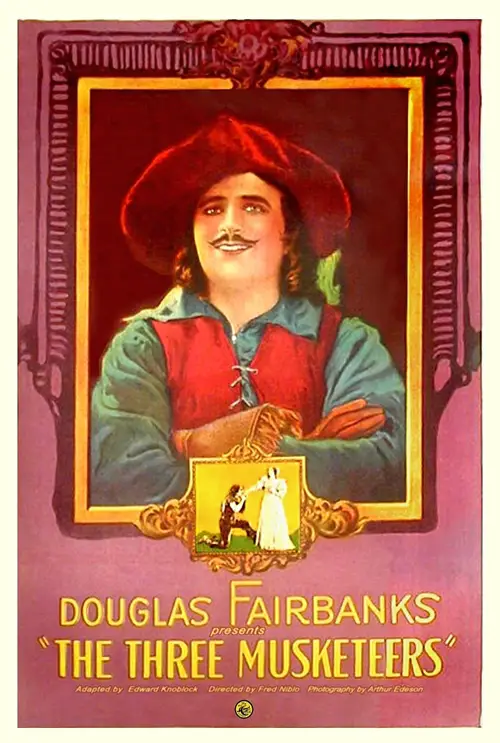
The young Gascon D'Artagnan arrives in Paris, his heart set on joining the king's Musketeers. He is taken under the wings of three of the most respected and feared Musketeers, Porthos, Aramis, and Athos. Together they fight to save France and the honor of a lady from the machinations of the powerful Cardinal Richelieu.
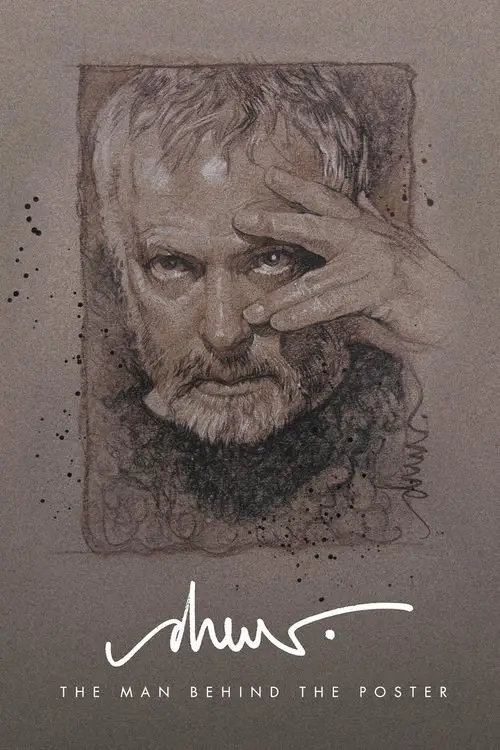
A documentary on legendary movie-poster artist Drew Struzan.
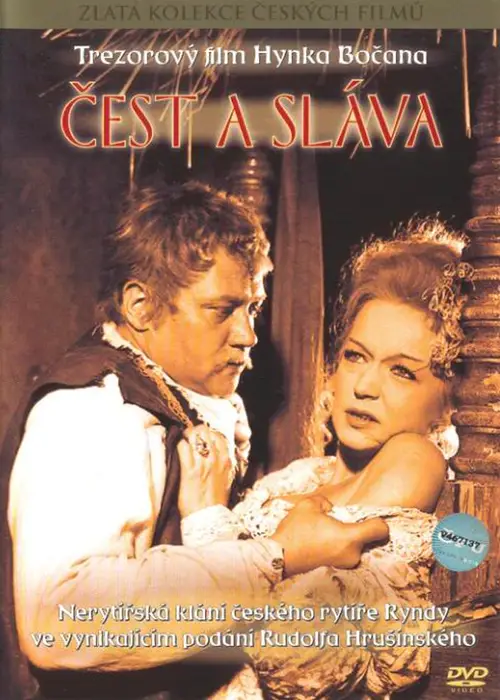
This historical film by Hynek BoÄan touches upon the indecisiveness of the Czech nation, ready to bend the backbone in face of foreign rule. Situating the story at the close of the Thirty Year War enabled the depiction of the misery of the people that affects even an impoverished aristocratic milieu. Rudolf HruÅ¡Ãnský appears here in the role of an indecisive knight, persuaded for a long time and in vain to join the anti-Habsburg movement. The story does not only captivate through the depiction of manifold human characters, intrigues and sycophancy, but also through the circumstances ruling over the devastated farmstead, sunk in mud and crudeness. One of the best films with an updating tendency has come into being here, rightly being named along the such greats as Kladivo na ÄarodÄjnice (Witches' Hammer).

A historical analysis of how groups such as the Naziâs may use language, symbols, and religious connotation in order to come to power. It raises questions that deserve in depth analysis and consideration. Questions include: Where do legends expand our thinking and where do they bury it? When does spiritual pursuit suddenly turn into fanaticism and violence? Last, have we as a society learned from our past, and if so have forgotten the lessons of the 20th Century? Are we now embarking on a new level only to learn the same old lessons about humanity again? In addressing these questions we are taken into the back drop of the history of Germany beginning in the late 1800âs through the late 20th Century at the eve of the 21st. âA society that does not take archetypes, myths, and symbols seriously will possibly be jumped by them from behind.â
© Valossa 2015–2026
| Privacy Policy